
PRP HAIR TREATMENT
PRP Hair Treatment in Jalandhar
Hair fall, thinning hair, and receding hairlines are common concerns affecting both men and women today. Stress, hormonal imbalance, genetics, poor lifestyle habits, and pollution can all contribute to gradual hair loss. If you are looking for a safe, natural, and effective solution, PRP Hair Treatment in Jalandhar can help stimulate healthy hair growth without surgery.
Platelet-Rich Plasma (PRP) therapy is one of the most trusted and widely recommended treatments for improving hair density and reducing hair fall. It uses your body’s own healing properties to rejuvenate weak hair follicles and encourage natural regrowth.
ABOUT THE TREATMENT
What Is PRP Therapy?
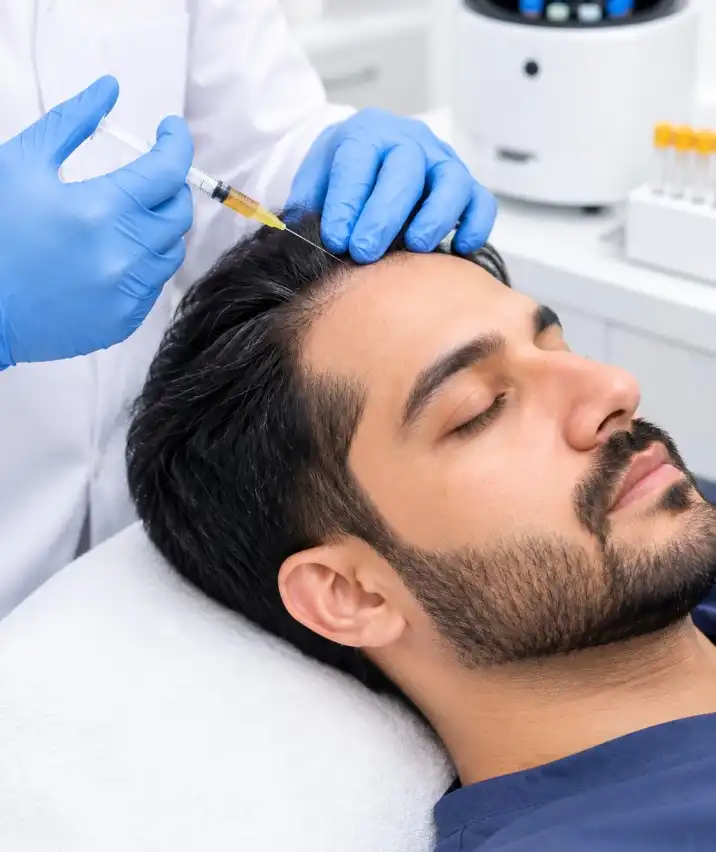
PRP (Platelet-Rich Plasma) therapy is a non-surgical treatment for hair thinning. A small sample of your blood is processed to concentrate the platelets, which carry natural growth factors, and this plasma is then placed into the scalp.
It is commonly used for early to moderate pattern hair loss, hair thinning in men and women, and to support results after a hair transplant. Outcomes vary from person to person, and your doctor will tell you honestly whether PRP is right for you.
Key Benefits
- Uses your body's own growth factors
- No surgery and no visible scarring
- Short sessions, return to routine quickly
- Can be combined with a hair transplant plan
- Suitable for men and women
HOW IT WORKS
The PRP Treatment Process
1. Consultation
Scalp and hair assessment to check if PRP suits your hair loss pattern.
2. Blood Sample
A small amount of blood is drawn, similar to a routine blood test.
3. Processing
The sample is spun in a centrifuge to separate the platelet-rich plasma.
4. Scalp Treatment
The plasma is placed into targeted areas of the scalp by our doctor.
Who May Benefit
- Early or moderate thinning of hair
- Reduced hair density or a widening parting
- Weak, fine hair that has lost volume
- Patients who want support after a hair transplant
Who May Need Another Option
- Advanced baldness with little active hair
- Certain blood disorders or clotting problems
- Patients on blood thinners (discuss with your doctor)
- Active scalp infection or pregnancy
PRP vs GFC: Which One Is Right for You?
Both PRP and GFC (Growth Factor Concentrate) use your own blood, but the preparation is different. PRP contains concentrated platelets along with plasma. GFC is processed further so that mainly the growth factors are separated and used, which many patients find more comfortable.
| PRP | GFC | |
|---|---|---|
| What is used | Platelet-rich plasma from your blood | Concentrated growth factors from your blood |
| Preparation | Single or double spin in a centrifuge | Multi-step processing to separate growth factors |
| Comfort | Mild discomfort, usually tolerable | Often described as more comfortable |
| Best for | Early to moderate thinning | Early to moderate thinning, patients wanting a refined option |
| Sessions | [3–4], a few weeks apart | [3–4], a few weeks apart |
The better choice depends on your hair loss stage, your scalp condition and your budget. Your doctor will recommend one after examining your scalp. You can read more about our GFC Treatment.
PRP vs Minoxidil
Minoxidil is a topical solution or foam applied to the scalp every day. PRP is a clinic-based procedure done in sessions.
- Effort: Minoxidil needs daily use. PRP needs scheduled sessions.
- Continuity: Minoxidil benefits generally fade if you stop using it. PRP is given in a course followed by maintenance as advised.
- Side effects: Minoxidil can cause scalp irritation or dryness in some people. PRP can cause temporary redness or tenderness.
- Together: Many doctors combine both, since they work differently. Your doctor will decide what suits you.
Neither treatment promises new hair in fully bald areas. For advanced baldness, a hair transplant such as FUE may be the better option.
PRP Hair Treatment for Women
Hair thinning in women is often diffuse, with a widening parting or overall reduced volume, rather than a receding hairline. PRP is commonly used for female pattern hair loss and general thinning.
Before starting PRP, your doctor may suggest checking other common causes, such as:
- Thyroid problems
- Low iron, ferritin or vitamin D
- Hormonal conditions such as PCOS
- Post-pregnancy or stress-related shedding
PRP is usually not advised during pregnancy. If you are breastfeeding or have any medical condition, please tell your doctor during the consultation.
PRP Aftercare: What to Do After Your Session
Aftercare is simple, and most people return to routine quickly. General guidelines (your doctor’s instructions come first):
- Avoid washing your hair for [24 hours] or as advised.
- Avoid heavy exercise, sauna and swimming for [24–48 hours].
- Do not scratch, rub or apply products on the scalp until your doctor allows it.
- Avoid hair colour and harsh chemical treatments for a few days.
- Avoid alcohol and smoking around the session, as they can affect healing.
- Do not take painkillers like aspirin or ibuprofen unless your doctor approves.
- Come for follow-ups as scheduled.
Mild redness or tenderness usually settles on its own. Contact us if you notice severe swelling, pus, fever or pain that is not settling.
How Long Do PRP Results Last?
PRP results are gradual. Most people notice less shedding after about [2–3 months], and better thickness and density around [4–6 months], though this varies from person to person.
How long the results last depends on:
- The cause and stage of your hair loss
- Whether you follow the recommended maintenance sessions
- Your age, lifestyle, diet and stress levels
- Whether you also use medical treatment, if advised
PRP does not change the genetic cause of pattern hair loss, so thinning can continue over time. That is why maintenance sessions, usually every [6–12 months] as advised, are recommended. Results are not guaranteed.
WHAT TO EXPECT
Sessions, Recovery and Results
PRP is usually done as a series of sessions spaced a few weeks apart, followed by maintenance sessions as advised by your doctor. Each session generally takes under an hour. You may notice mild redness, tenderness or swelling for a short time, and most people resume normal routines soon after.
Improvement is gradual, often noticed after a few months as shedding reduces and hair looks thicker. Results are not guaranteed and differ by individual, so the number of sessions and expected outcome are explained at your consultation.
FAQ
Frequently Asked Questions About PRP
Most people find it tolerable. Some feel mild discomfort during the injections, and numbing options can be discussed with your doctor.
It depends on your hair loss stage. Many plans involve a few sessions a few weeks apart, followed by maintenance. Your doctor will set the plan after examination.
No. PRP supports existing hair and slows thinning. It does not create new hair in fully bald areas, where a transplant may be the better option.
Change is gradual. Many patients notice less shedding and better hair quality after a few months, but results vary.
Temporary redness, tenderness or mild swelling can occur. Serious side effects are uncommon when the treatment is done by a qualified doctor.
Cost depends on the number of sessions and your treatment plan. Book a free consultation for an accurate quote.
Neither is better for everyone. Both use your own blood and suit early to moderate thinning. Your doctor will recommend one after examining your scalp.
Many doctors combine them, but follow your doctor’s advice on timing and dosage.
PRP is commonly used for female hair thinning, but it is not advised during pregnancy. Your doctor will check for underlying causes first.
Results usually build over a few months and are maintained with follow-up sessions. They are not permanent, as the cause of hair loss continues.